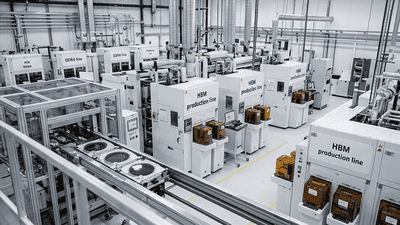
As HBM4 moves from pilot to early volume, industry attention is already shifting toward the next logical stages: evolutionary refinements sometimes labeled HBM4E and a more disruptive generational step often discussed under the HBM5 moniker. This post surveys likely technical directions, realistic performance and integration targets, key enabling technologies, supply-chain and manufacturing implications, and design trade-offs system architects should expect over the next 3–6 years.

What “HBM4E” and “HBM5” mean in practice
Industry shorthand often uses “E” suffixes to denote evolutionary improvements (HBM4E) and integer increases to indicate larger architectural jumps (HBM5). Practically:
- HBM4E: Incremental enhancements over HBM4 targeting improved signaling margins, modest capacity-per-stack increases, lower power per bit, and manufacturing friendliness. The goal is faster time-to-volume with marginal engineering changes rather than a full ecosystem rework.
- HBM5: A generational leap that may involve new physical-layer signaling, different stack or interposer topologies, advanced TSV/hybrid-bond integration, or even more radical shifts such as integrated cooling channels or heterogeneous memory-die mixes. HBM5 ambitions focus on doubling effective bandwidth-per-pin and materially increasing per-stack capacity while keeping power and thermal behavior manageable.
Expect HBM4E introductions in near-to-mid-term product cycles and HBM5 development to be driven by both fundamental research and key system needs (exascale training, extremely dense inference fabrics, and vertically integrated accelerator platforms).
Key drivers shaping the post-HBM4 roadmap

Several commercial and technical forces determine roadmap priorities:
- Workload demands: Larger models, multi-modal inference, and real-time analytics increase pressure for both bandwidth and capacity per accelerator node.
- Power and thermal ceilings: Any roadmap must improve effective bandwidth per watt; raw bandwidth gains without energy efficiency are strategically limited.
- Manufacturability and yield: Roadmap choices will favor concepts that reuse existing process flows and packaging methods where possible to shorten qualification timelines.
- Packaging economics: Interposer cost, hybrid-bond throughput, and test/burn-in intensity shape which features can scale economically.
- Materials and tool access: Availability of next-generation precursors, low-defect interposer silicon, and advanced metrology tools influence roadmap feasibility and geography of production.
HBM4E: targeted improvements and likely specs
HBM4E is best viewed as an “HBM4+” family intended to broaden applicability and ease adoption at scale. Likely improvements include:
- Bandwidth-per-pin: modest increases of 10–25% through improved PHY tuning, better channel equalization, and optimized signaling margins at existing IO rates.
- Per-stack capacity: incremental capacity uplift (10–30%) enabled by slightly larger die or thinner die stacks, plus denser per-die capacity via improved DRAM cell designs.
- Power-per-bit: 10–20% reductions through lower-voltage IO options, improved termination schemes, and adaptive signaling that reduces energy when full link capacity is unnecessary.
- Manufacturing pragmatism: rules and layout choices that preserve hybrid-bond and TSV process windows to minimize yield impact (e.g., maintaining familiar TSV pitches and reusing tested interposer classes).
- Reliability and qualification improvements: tighter signaling margin specs, standardized test vectors for interoperability, and defined thermal interface recommendations to speed system integration.
HBM4E’s attractiveness lies in its ability to deliver meaningful improvements while leveraging existing packaging ecosystems—helpful for hyperscalers and OEMs seeking incremental performance without the cost and risk of a ground-up platform change.
HBM5: plausible architectures and spec targets
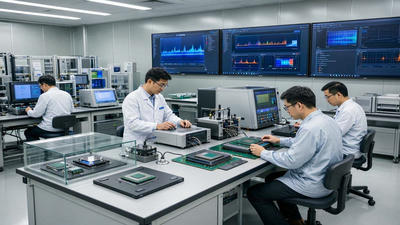
HBM5 will likely require multiple technology advances combined. Below are plausible architectural targets that industry conversations and lab roadmaps point toward:
- Bandwidth-per-pin: realistic near-term aspirational targets aim for 2x–2.5x HBM4 bandwidth-per-pin through combined improvements in signaling (less jitter, wider margin) and PHY innovation (multi-level signaling, advanced equalization).
- Per-stack capacity: 2x–4x increases depending on die density improvements and higher die counts per stack enabled by more reliable thinning, better thermal paths, and advanced bonding.
- Power-efficiency: target energy-per-bit reductions of 30–50% compared to HBM4 via lower-voltage IO, improved encoding schemes, on-die power management (bank-level gating), and better thermal interfaces to sustain high utilization without throttling.
- Co-packaged or embedded cooling: HBM5 may standardize embedded microfluidic channels in interposers or adopt more mature direct liquid coupling approaches at the package level to manage higher heat fluxes.
- Heterogeneous stacks: mixes of DRAM with near-die nonvolatile media or logic die for management and in-package caching could become a performance lever—reducing effective data-movement energy and broadening use cases.
These targets are ambitious and contingent on progress across many domains: materials science, lithography and metrology for finer TSVs, hybrid-bond yield, PDN design changes, and thermal-integration advances. HBM5 is therefore likely to be a multi-year, cross-industry effort rather than a single-company sprint.
Enabling technologies and process advances required
Several technology areas must progress to realize HBM4E and HBM5 ambitions:
- Advanced hybrid-bonding: higher-yield, finer-pitch hybrid bonding supports increased inter-die signaling density and tighter integration between die and interposer.
- Improved TSV and RDL schemes: finer TSV pitches for power/thermal paths and multilayer RDLs with low-loss dielectrics to support higher-speed signaling and power distribution.
- New low-energy signaling techniques: improved PHY architectures, on-die pre-emphasis and equalization, and perhaps multi-level signaling (PAM4-like schemes) adapted for memory IO.
- Thermal interface evolution: higher-thermal-conductivity TIMs, embedded microchannels, and standardized cold‑plate interfaces that reduce junction-to-coolant resistance.
- Materials and precursors: ultra-high-purity GMC precursors for ALD/CVD, low-defect interposer silicon, and EMCs/underfills with improved thermal conduction and low-stress mechanics.
- Metrology and inspection: high-throughput XRM, SAM, and novel inline electrical-thermal metrology capable of detecting sub-micron defects in stacked environments to shorten yield learning.
These enabling technologies interact: e.g., better TIMs reduce thermal limits allowing more die-per-stack, but more die-per-stack increases demand for reliable hybrid-bonding and TSVs—so roadmaps must align across suppliers and toolmakers.
Manufacturing and supply-chain implications
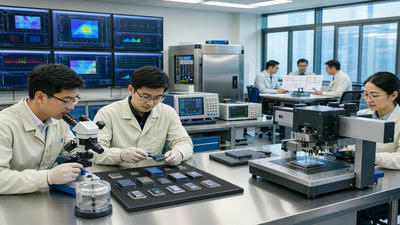
Moving beyond HBM4 raises capacity and sourcing questions:
- Packaging capacity scaling: HBM4E may reuse many existing CoWoS/hybrid-bond lines, but HBM5’s finer pitches and embedded cooling likely require dedicated tooling and OSAT process upgrades with multi-year lead times.
- Material concentration risk: demand for higher-grade TIMs, ALD precursors, and low-defect interposer silicon will rise—exposing supply chains where a few suppliers dominate.
- Test and burn-in expansion: HBM5’s complexity increases test intensity; test equipment vendors and OSAT labs must scale parallelism and automation to avoid new bottlenecks.
- Cost dynamics: HBM5 will initially be expensive per GB; widespread adoption depends on how quickly yields improve and tooling costs amortize across volume. For many buyers, HBM5 will be a premium tier adopted first by hyperscalers and high-performance niches.
- Geopolitical variations: access to key equipment or materials may vary by region due to export controls or policy incentives—buyers and suppliers will need diversified sourcing and georegional strategies.
System and architecture impacts
HBM4E and HBM5 specs influence system architecture decisions in several ways:
- Node-level compute density: higher per-node bandwidth and capacity can reduce the number of nodes for a given workload, changing network fabric design and rack-power distribution strategies.
- Thermal and PDN co-design: more aggressive memory requires tighter collaboration between package, board, and datacenter teams to ensure cooling and power delivery scale without prohibitive cost.
- Software and memory hierarchy: with larger and faster on-package memory, system software may evolve to exploit capacity tiers differently—moving caching strategies and scheduler designs toward maximizing on-package locality.
- Form-factor and maintenance: embedded cooling or more integrated packages change serviceability. Datacenter ops teams will need updated processes for replacement and monitoring of HBM5-equipped nodes.
Performance-per-watt and the economics of adoption
HBM adoption ultimately depends on performance-per-watt and total-cost-of-ownership (TCO) for the target workloads. Roadmap success metrics include:
- Bandwidth-per-watt improvement: HBM4E and HBM5 must materially improve effective bandwidth per watt to justify higher per-module costs and increased cooling complexity.
- Capacity-per-node economics: Doubling capacity-per-stack without proportional increases in module or system cost improves economics for large models that are memory-limited.
- Time-to-solution: Faster training or lower inference latency that reduces compute hours or improves product time-to-market provides an economic lever hyperscalers are willing to pay for.
- Operational simplicity: If HBM5 introduces significant operational overhead (complex cooling, higher maintenance), adoption will lag despite raw performance gains unless these costs are offset elsewhere.
Roadmap timeline and realistic expectations
Based on current industry progress and historical cadence between major HBM generations, a realistic timeline might look like:
- 2026–2028: HBM4E introductions—incremental PHY and die-density improvements, standardized thermal interfaces, and broader HBM4 family adoption across hyperscalers and enterprise OEMs.
- 2027–2029: Pilot HBM5 engineering samples—research and co-development across memory, packaging, and thermal suppliers; early adopters test embedded cooling and new PHY paradigms in limited production runs.
- 2029–2032: Volume ramp of HBM5 (if enabling technologies mature)—scaling depends on packaging capacity expansions, successful yield learning, and proven reliability under datacenter conditions.
These timelines assume steady equipment deliveries, material supply stabilization, and no major policy disruptions that would block access to critical tools or precursors.
Who benefits and who faces the biggest challenges
Winners and challenges in the post-HBM4 era:
- Winners: hyperscalers and OEMs that can co-invest and secure priority allocations; equipment vendors supplying hybrid-bond, ALD, metrology, and thermal-integration tools; OSATs that upgrade to support embedded cooling and finer pitches; material suppliers who develop higher-conductivity TIMs and low-defect interposer silicon.
- Challenged: smaller memory vendors lacking capital to invest in new packaging or test capacity; datacenters unwilling or unable to adopt more complex cooling infrastructure; regions with limited access to specialized equipment or suppliers due to geopolitics.
Practical recommendations for stakeholders
To prepare for HBM4E and HBM5 developments, stakeholders should take pragmatic steps now:
- Memory makers and OSATs: prioritize modular process upgrades and pilot programs for embedded cooling; co-develop with materials and tool vendors; hedge material supply through multi-sourcing where feasible.
- Hyperscalers and OEMs: participate early in qualification programs, consider co-investment in packaging/test capacity, and plan datacenter upgrades for cooling and PDN if HBM5 adoption is strategic.
- Equipment and materials suppliers: invest in scalable throughput improvements for ALD, DRIE, CMP, hybrid-bond equipment, and high-resolution inspection; develop standards and reference kits to accelerate customer qualification.
- Investors: favor vertically integrated players and those with strong strategic customer contracts or proprietary thermal/material IP that enable capture of service and integration revenue as module ASPs normalize.
Risks and open technical questions
Several uncertainties could reshape the roadmap:
- PHY limits: Diminishing returns from signaling improvements could make bandwidth-per-pin gains more expensive or impractical beyond certain thresholds.
- Thermal ceilings: If embedded cooling solutions prove difficult to scale reliably and cheaply, designers may prioritize modest capacity growth over aggressive stack counts.
- Materials availability: Concentrated suppliers for critical precursors, TIMs, and interposer substrates could introduce supply fragility or geopolitical constraints.
- Competing architectures: Alternatives—chiplet fabrics, advanced on-package caches, or new memory technologies (e.g., high-density on-die SRAM-like caches)—could reduce the urgency for extreme HBM densification.
Conclusion
The post-HBM4 roadmap is a mix of pragmatic evolution and ambitious transformation. HBM4E represents an attainable near-term path that improves bandwidth, capacity, and power efficiency while leveraging existing packaging ecosystems. HBM5 promises much larger step-changes in bandwidth-per-pin and per-stack capacity but depends on simultaneous progress in hybrid-bond yield, TSV/RDL advances, thermal integration (including embedded cooling), materials, and metrology. For the industry, the sensible approach is staged: pursue HBM4E optimizations to capture near-term gains and invest in cross-industry R&D, co-development, and pilot projects that pave the way for HBM5 once manufacturing, materials, and system-level integration challenges are demonstrably solved.